Zero-Turn Mowers: The Complete Guide to Choosing the Right Machine

A zero-turn mower is built around one fundamental advantage: *independent control of the drive wheels lets the machine turn within its own footprint*. That changes how quickly you can move around trees, garden beds, fences and other obstacles while maintaining a clean, consistent cut.

But choosing a zero-turn mower is more complicated than simply selecting the biggest engine or widest deck. The right machine depends on your property size, terrain, mowing frequency, grass conditions, operator comfort and whether the mower is intended for residential or commercial work.

This guide explains the mechanical system behind a zero-turn mower, what specifications actually matter, how to operate one safely, and how to choose a machine that makes sense for the work you expect it to perform.

Mobirise Website Builder

What Is a Zero-Turn Mower?

A zero-turn mower is a riding lawn mower designed to achieve extremely tight turns by independently controlling the drive wheels. Instead of relying on a conventional steering axle, most lap-bar models use two control levers connected to separate hydrostatic drive systems.

Push both levers forward and the mower travels forward. Pull them back and it reverses. Moving one lever differently from the other changes the speed of each drive wheel, allowing the mower to pivot, turn tightly or rotate around an obstacle.

That maneuverability is the reason zero-turn lawn mowers are particularly effective on properties containing trees, landscaping beds, buildings and other obstacles.

How Does a Zero-Turn Mower Work?

The engineering behind a zero-turn mower is relatively simple but extremely effective.

The engine supplies mechanical power to the machine. That power is transferred through hydrostatic transmissions or transaxles to the drive wheels. Each side of the machine can be controlled independently.

This means the operator isn't merely steering a front axle. The operator is controlling wheel speed and direction.

If both drive wheels rotate at approximately the same speed, the mower travels straight. If one wheel slows while the opposite wheel continues forward, the mower turns. If the wheels rotate in opposite directions, the machine can pivot around its center.

This is the fundamental mechanical principle behind zero-turn maneuverability.

The Main Mechanical Systems
Engine


The engine provides the power required to drive the mower and cutting deck. Residential machines commonly use single- or V-twin gasoline engines, while heavy commercial machines can use larger commercial engines and, depending on the model, diesel or other power systems.

Engine horsepower matters, but horsepower alone does not determine mowing performance.

A properly matched engine must supply enough torque to maintain blade speed when the mower encounters thick, wet or rapidly growing grass.

Hydrostatic Drive

The hydrostatic drive is one of the most important components on a zero-turn mower.

Instead of using a conventional gear transmission, hydraulic power is used to control the drive wheels. Separate left and right drive systems allow extremely precise speed and directional control.

For residential use, lighter-duty transaxles may be appropriate. Commercial machines generally use heavier-duty drive systems designed for longer operating hours, higher loads and greater heat management.

When comparing machines, don't look only at engine horsepower. The engine, hydraulic system, transaxles and deck should be considered as one powertrain.

Cutting Deck

The deck houses the cutting blades and determines how much grass can be cut during each pass.

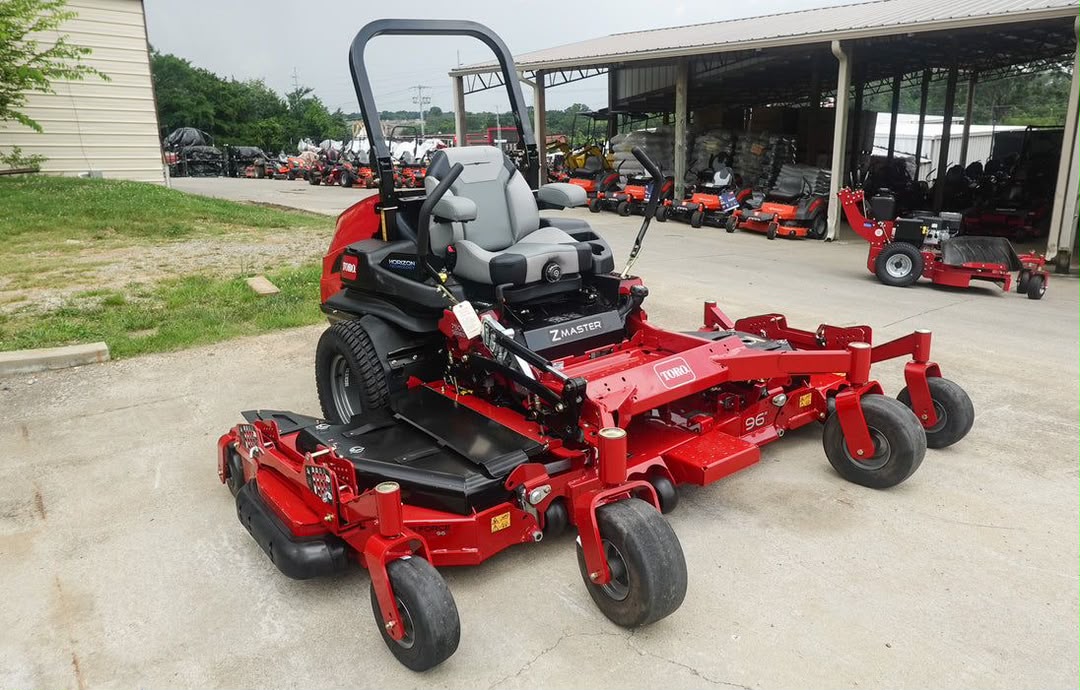
Common deck widths range from compact configurations around 36–42 inches to large commercial decks exceeding 60 inches.

A wider deck can reduce mowing time on large, open properties. However, a smaller deck can be easier to maneuver through narrow gates, landscaped areas and obstacles.

For that reason, the biggest deck is not automatically the best zero turn mower.

Fabricated vs. Stamped Decks

Deck construction is another important engineering consideration.

A stamped deck is formed from a single piece of steel and can be perfectly suitable for many residential applications.

A fabricated deck is assembled from multiple pieces of heavier-gauge steel. It is generally preferred when the machine will encounter demanding conditions or extended commercial use.

What matters is not simply the word “fabricated,” but the overall deck design: steel thickness, reinforcement, spindle construction, airflow, blade arrangement and how easily the deck can be serviced.

- Zero Turn Category
Mobirise Website Builder

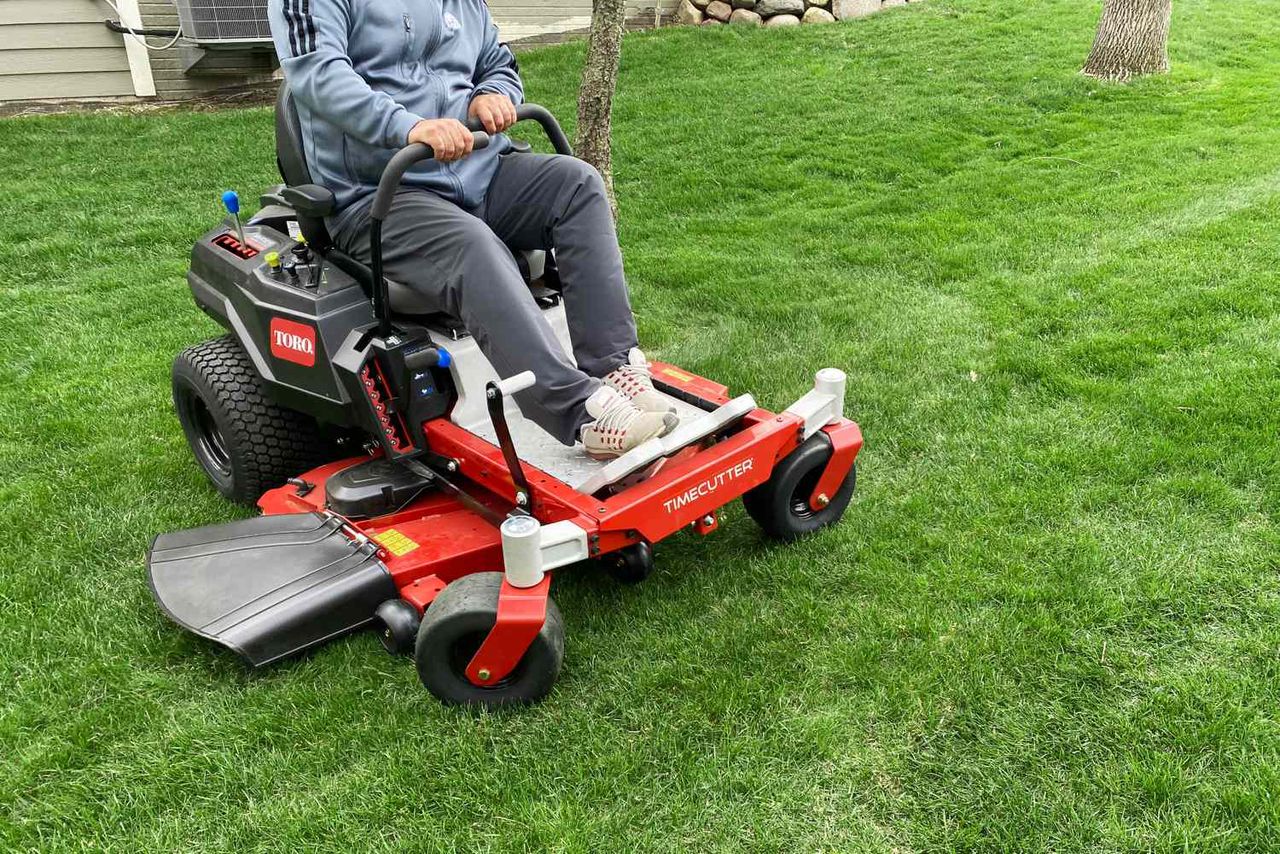
Toro zero-turn radius riding lawn mower navigating open residential grass yard

What Makes a Good Zero-Turn Mower?

A good zero-turn mower should be viewed as a complete system rather than a collection of impressive specifications.

Look for:

. A properly matched engine and drive system
. Durable deck construction
. Strong blade spindles
. Responsive hydrostatic controls
. Appropriate deck width
. Comfortable operator position
. Adequate traction
. Serviceable components
. Easy access for maintenance
. A frame designed for the intended workload
. Safety features appropriate for the terrain

For commercial mowing, durability and serviceability become increasingly important because downtime has a direct effect on operating costs.

For residential mowing, ease of operation, comfort, maneuverability and value may carry greater weight.

How to Choose the Best Zero-Turn Mower

How to Choose the Right Deck Width

Deck width directly affects productivity, but only when the property allows the machine to use that width efficiently.

Smaller decks

Best suited to:

. Smaller properties
. Narrow gates
. Dense landscaping
. Tight spaces
. Properties with numerous obstacles
. Medium decks

A strong compromise for many homeowners. They provide substantial mowing capacity without becoming difficult to maneuver.

Large commercial decks

Best suited to:


. Large open lawns
. Sports grounds
. Commercial properties
. Acreage
. Professional landscaping operations

The basic rule is simple:

More open space favors a wider deck. More obstacles favor a narrower deck.

Ferris similarly emphasizes the relationship between deck size, mowing time and maneuverability, while Cub Cadet's current lineup spans multiple deck widths and drive configuration

Are Zero-Turn Mowers Good on Hills?

This is one of the most important questions to ask before buying.

A zero-turn mower can perform well on appropriate slopes, but not every zero-turn mower is equally suited to hills.

Slope performance depends on:

. Tire traction
. Machine weight distribution
. Center of gravity
. Drive-wheel design
. Operator skill
. Ground conditions
. Slope angle
. Manufacturer's operating limits

Wet grass can dramatically reduce traction.

For sloped terrain, don't select a mower simply because it has a powerful engine. Stability and controlled traction are more important.

Some modern zero-turn designs also use steering-wheel systems or specialized stability technologies for operators who want additional control on sloped terrain.

Always follow the specific manufacturer's slope and operating instructions.

Mobirise Website Builder

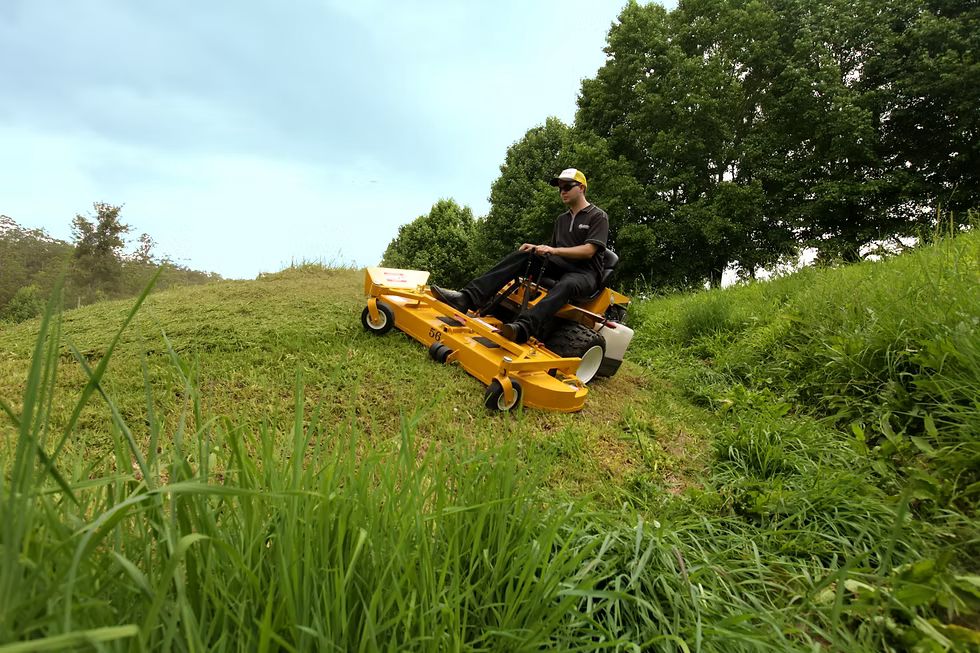
Commercial wide-deck zero-turn mower navigating rough overgrown terrain and slope

How to Drive a Zero-Turn Mower

Learning to drive a zero-turn mower is easier when you understand what the control levers are actually doing.

Moving forward

Move both drive levers forward gradually and evenly.

Slowing down

Return the levers toward the neutral position rather than making abrupt movements.

Turning right

Reduce or reverse the right-side drive relative to the left side.

Turning left

Reduce or reverse the left-side drive relative to the right side.

Pivoting

When the drive wheels are controlled in opposite directions, the mower can rotate around a very small turning radius.

The key to smooth operation is small, deliberate control movements.

How to Mow With a Zero-Turn Mower

Start by establishing a mowing pattern that matches the shape of the property.

For open areas, long parallel passes are generally efficient. Around trees and landscaping beds, use controlled turns rather than repeatedly pivoting aggressively in the same location.

Avoid mowing excessively fast simply because the mower can travel at high speed. Cutting quality depends on blade tip speed, grass density, deck airflow, terrain and forward speed.

If the grass is tall or wet, reducing ground speed can allow the deck to process clippings more effectively.

Zero-Turn Mower Controls: Lap Bars vs. Steering Wheel

Most traditional zero-turn mowers use lap bars, but steering-wheel-controlled designs are also available.

Lap bars

Advantages include:

. Extremely tight maneuvering
. Precise independent wheel control
. Excellent obstacle navigation
. Fast direction changes

They require a short learning period for new operators.

Steering-wheel systems

A steering-wheel zero turn can feel more familiar to operators accustomed to conventional riding mowers.

This can be particularly attractive for buyers who want zero-turn maneuverability but prefer a more traditional steering interface.

The best system is ultimately the one that provides predictable control for the operator and the terrain.

Mobirise Website Builder

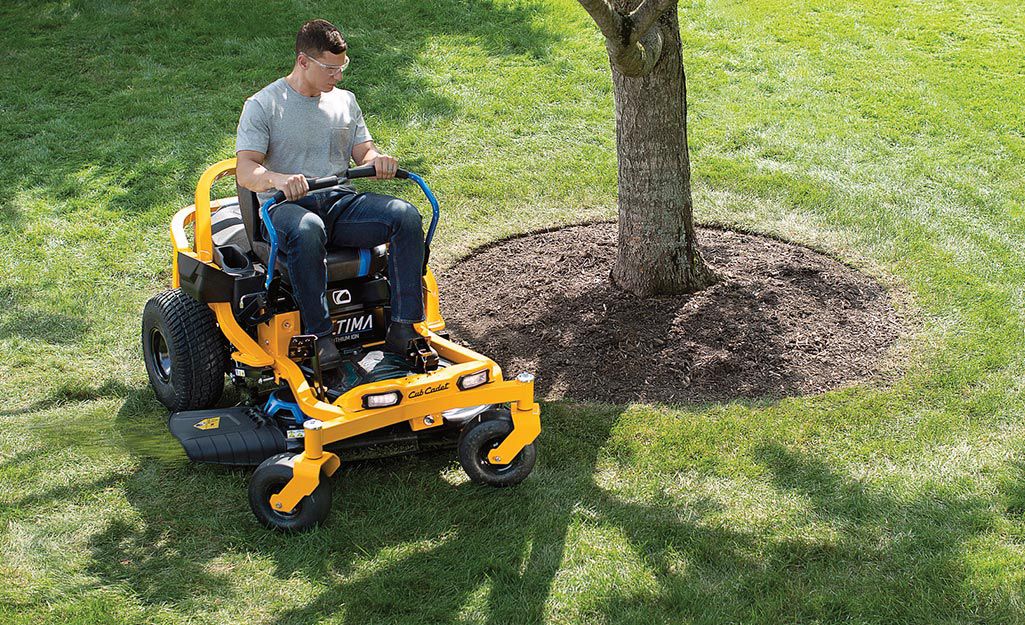
zero-turn mower making tight precision turn around tree trunk base in residential yard

Suspension and Operator Comfort

Suspension is more than a luxury when a mower is operated for several hours.

The operator is exposed to vibration from the engine, deck, tires and terrain. A well-designed seat, suspension system and frame can reduce the amount of shock transmitted to the operator.

This is an area where commercial manufacturers increasingly differentiate their machines. Ferris, for example, places suspension technology at the center of its zero-turn product strategy, while Exmark emphasizes operator isolation and ergonomics.

However, suspension should not be evaluated separately from the tires, seat, frame and terrain. A mower that feels excellent on smooth grass may behave differently on rough ground.

Tires, Traction and Weight Distribution

The drive tires are responsible for transferring engine power through the hydrostatic system to the ground.

A zero-turn mower can have plenty of horsepower and still struggle if traction is poor.

Important considerations include:

. Tire diameter
. Tire width
. Tread pattern
. Ground pressure
. Machine weight
. Weight distribution
. Grass condition

For hills, traction is particularly important because wheel slip can reduce directional control.

For delicate turf, excessive ground pressure can also cause rutting or turf damage, especially during aggressive turns

How Much Is a Zero-Turn Mower?

Zero-turn mower prices vary dramatically according to construction, deck size, engine, transmission, suspension, intended workload and brand.

Entry-level residential machines generally cost far less than full commercial machines.

As the machine moves toward professional use, buyers are paying for more than horsepower. They are paying for:

. Heavier construction
. Stronger drive systems
. More durable decks
. Commercial engines
. Improved operator ergonomics
. Greater serviceability
. Longer-duty-cycle capability

For that reason, comparing two machines purely by price or horsepower can produce a misleading conclusion.

Zero-Turn Mower Brands Worth Comparing

Several established manufacturers compete across residential, prosumer and commercial segments.

Cub Cadet

Known for a broad zero-turn lineup covering different deck sizes, control configurations and residential-to-commercial applications.

Toro

A major name in both residential and professional turf equipment, with zero-turn machines spanning homeowner and commercial applications.

Husqvarna

Offers residential and professional zero-turn machines, including models emphasizing fabricated decks, commercial transmissions, ergonomics and suspension.

Exmark

Strongly associated with professional landscaping, with its lineup spanning Quest, Radius and Lazer Z families. The company places particular emphasis on cut quality, productivity, ergonomics, durability and serviceability.

Ferris

A notable choice for buyers who prioritize suspension and commercial comfort, with models ranging from compact machines to large professional units.

Other brands worth researching include Scag, Bad Boy and Bobcat, particularly when comparing commercial construction, deck design and drive systems.

Zero-Turn Mower Maintenance: What Determines Long-Term Value?

A mower's purchase price is only one part of ownership cost.

Regular maintenance should include inspection and servicing of:

. Engine oil and filters
. Air filtration
. Fuel system
. Blades
. Blade spindles
. Deck belts
. Hydrostatic system
. Tires
. Battery
. Cooling system
. Grease points
. Fasteners and safety components

Keep the underside of the deck clean enough to prevent excessive buildup, inspect blades regularly and address unusual vibration immediately.

For commercial operators, maintenance intervals should be treated as part of the production schedule rather than something done only after a problem occurs.

Are Zero-Turn Mowers Worth It?

For the right property, yes.

A zero-turn mower becomes particularly valuable when mowing time, maneuverability and cutting productivity matter.

They are especially useful for:

Large residential lawns
Acreage
Properties with many obstacles
Landscaping businesses
Grounds maintenance
Commercial turf
Large open grass areas

They may be less appropriate where terrain is extremely steep, access is restricted or the property is too small to justify the additional cost and size.

The smartest purchase is therefore not necessarily the most powerful zero-turn mower.

It is the mower whose deck, powertrain, traction, controls and construction match the job.

Zero-Turn Mower Buying Checklist

Before buying, answer these questions:

. How many acres will I mow?
. How many hours per week will the machine operate?
. Is the property flat, rolling or hilly?
. How many trees and obstacles must I navigate?
. What deck width can my gates and storage area accommodate?
. Do I need residential or commercial construction?
. What transmission or transaxle is fitted?
. Is the deck stamped or fabricated?
. How easy is routine maintenance?
. Are replacement parts readily available?
. Is the seat and suspension appropriate for my mowing time?
. Does the manufacturer specify the mower for my terrain?
. What warranty and dealer support are available?
. What will the mower cost to operate over several years?

Company
  • About
  • Press
  • Careers
  • Social
  • Contact
Features
  • Branding
  • Promotion
  • Design
  • Creative
  • Production
Support
  • Help
  • Info
  • Contacts
  • FAQ
  • Report
About
  • History
  • Clients
  • Teams
  • Brand
  • Terms
 Web Site  Building Software

Designed with Mobirise ‌

Free Offline Site Creator