Mobirise Website Builder

Remote Control Mower Guide (2026-2027)

Remote Control Mowers for Slopes, Rough Terrain & Demanding Ground

Remote control mowers give the operator direct control of a powerful mowing machine without requiring them to sit on the equipment. Instead of putting the operator on a steep embankment, rough field, ditch or other difficult area, the machine can be controlled remotely from a safer position.

Modern remote control mowers combine a radio-control system with a mechanical or hydraulic drivetrain, dedicated cutting system, traction-focused chassis and safety controls. Depending on the machine, configurations can include tracked or wheeled drive systems, flail cutting decks, petrol or hybrid powertrains and specialized systems designed for steep slopes and heavy vegetation.
What Is a Remote Control Lawn Mower?

A remote control lawn mower is a self-propelled mowing machine operated from a distance using a wireless transmitter. Instead of riding behind or on the mower, the operator controls functions such as forward and reverse travel, steering, speed and cutting engagement from the remote controller.

Commercial machines are considerably different from consumer radio-controlled toys. Professional remote mowers can incorporate hydraulic drive systems, tracked undercarriages, heavy-duty flail cutting systems, low-centre-of-gravity chassis designs and dedicated safety systems. Some professional machines are designed specifically for steep slopes, vegetation management and terrain where conventional mowing equipment becomes difficult or hazardous to operate.

Remote Control vs Autonomous

This distinction is important.

Remote control:
The operator controls the machine continuously from a transmitter.

Autonomous/robotic:
The mower uses navigation, mapping and sensing technologies to perform mowing with substantially less direct steering.

A remote mower can therefore be highly automated in its machine functions while still requiring an operator to control its movement.

- [Explore Products] 

How Do Remote Lawn Mowers Work?

From the Remote Controller to the Cutting Deck

The basic operating chain is:

Operator → Radio transmitter → Receiver → Control system → Drive system → Cutting system

When the operator moves a control on the transmitter, the command is transmitted wirelessly to a receiver installed on the machine. The machine’s control electronics interpret the command and regulate the drive system and other functions.

Depending on the design, the control system can manage:

•⁠ ⁠Forward and reverse movement
•⁠ ⁠Steering
•⁠ ⁠Travel speed
•⁠ ⁠Cutting engagement
•⁠ ⁠Cutting height
•⁠ ⁠Auxiliary functions
•⁠ ⁠Engine functions
•⁠ ⁠Emergency stop

Commercial remote mowers commonly use radio systems designed for reliable control at a specified operating range, but advertised range should not be interpreted as unlimited operating distance. Terrain, buildings, vegetation and line-of-sight conditions can affect radio communica

The Engineering Behind a Remote Control Mower

1.⁠ ⁠Radio-Control System

The transmitter is the operator’s interface with the machine.

A professional controller may include:

•⁠ ⁠Dual joysticks
•⁠ ⁠Travel controls
•⁠ ⁠Blade engagement
•⁠ ⁠Speed controls
•⁠ ⁠Emergency stop
•⁠ ⁠Status indicators
•⁠ ⁠Battery monitoring
•⁠ ⁠Auxiliary controls

The receiver mounted on the mower converts the radio commands into electronic control signals.

The quality of this communication system matters because a remote mower is only useful when the operator can maintain predictable control of the machine.

2.⁠ ⁠Drive System

The drive system converts engine or electrical power into controlled movement.

Two common approaches are:

Hydraulic / Hydrostatic Drive

An engine drives a hydraulic pump, which supplies hydraulic motors responsible for moving the tracks or wheels.

Hydrostatic drive is particularly useful for heavy machines because it allows controlled low-speed movement and substantial torque.

Electric Drive

Some newer machines use electric motors for propulsion. This can provide precise motor control and can be combined with battery or hybrid power architectures.

The exact drivetrain should always be evaluated against the mower’s weight, slope rating, traction requirements and intended application.

Tracks vs Wheels

Why Many Remote Mowers Use Tracks

Tracked remote mowers are particularly common in slope and rough-terrain applications.

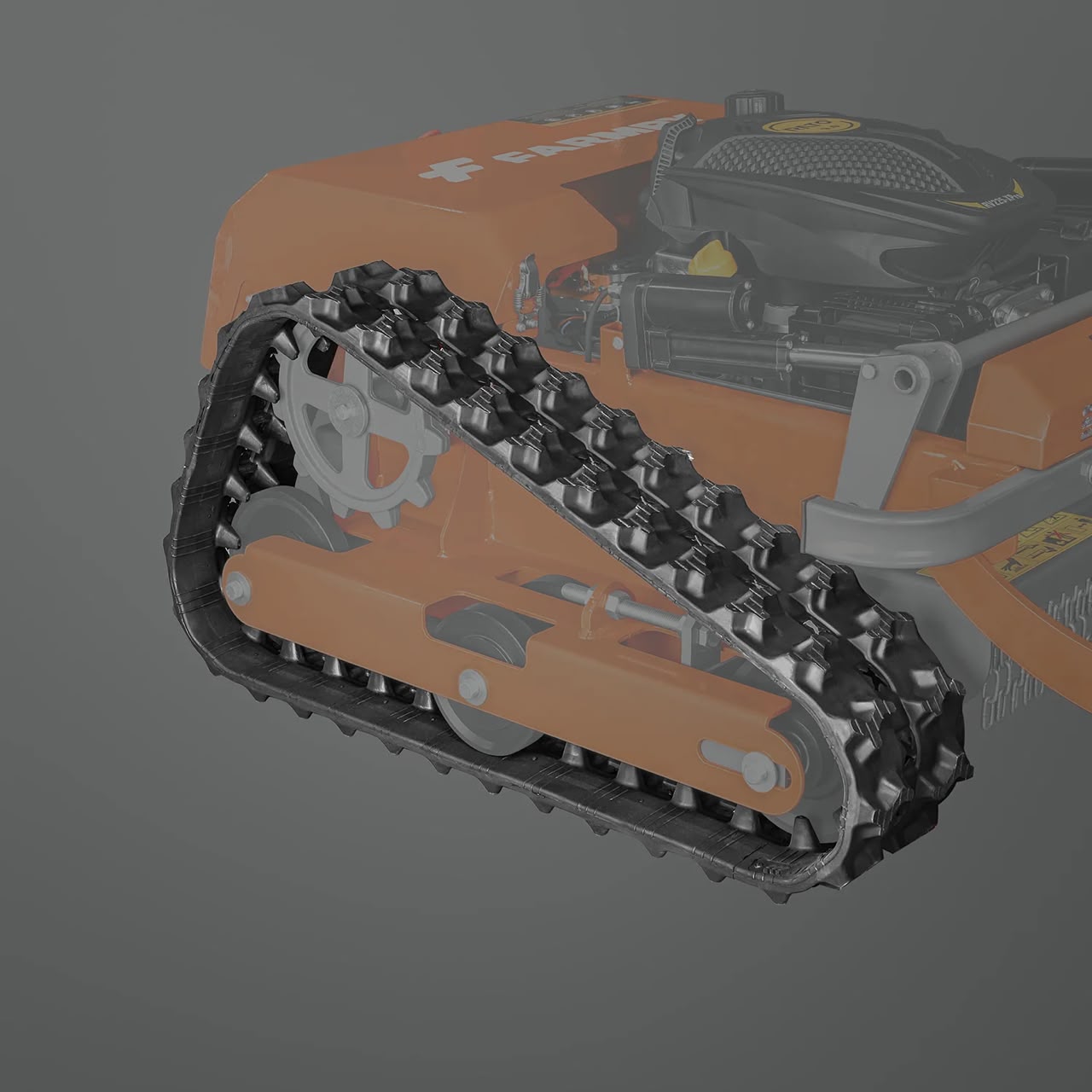
A track distributes machine weight over a larger contact area than a conventional wheel. This can help reduce ground pressure and improve traction on certain surfaces.

Track design also influences:

•⁠ ⁠Ground contact
•⁠ ⁠Traction
•⁠ ⁠Stability
•⁠ ⁠Turning
•⁠ ⁠Slope performance
•⁠ ⁠Ground pressure
•⁠ ⁠Obstacle crossing

Some professional tracked machines are deliberately designed with a low centre of gravity and large track units to improve stability on steep terrain.

But Tracks Don’t Make a Machine Unstoppable

Terrain capability depends on the complete machine.

Consider:

Machine weight + centre of gravity + track geometry + traction + slope + surface condition + attachment

A mower that performs well on a dry slope may behave differently on wet grass, loose soil or uneven ground.

Mobirise Website Builder

 remote-control slope mower featuring heavy-duty rubber track drive assembly for steep terrain traction

The Cutting System

Why Remote Mowers Often Use Flail Mowers

One of the most important differences between ordinary residential lawn mowers and many professional remote machines is the cutting system.

Remote-controlled slope and vegetation mowers frequently use flail cutting systems.

Instead of relying on a conventional rotary blade arrangement, a flail mower uses a rotating rotor carrying numerous individual flails or cutting tools.

As the rotor spins, the flails strike and cut vegetation.

This configuration can be particularly useful for:

•⁠ ⁠Tall grass
•⁠ ⁠Dense weeds
•⁠ ⁠Rough vegetation
•⁠ ⁠Small brush
•⁠ ⁠Overgrown areas
•⁠ ⁠Slopes
•⁠ ⁠Roadsides
•⁠ ⁠Embankments
•⁠ ⁠Industrial grounds

Professional machines demonstrate how widely these systems can vary. For example, published specifications for the Timan RC-751 describe a 750 mm flail mower, while larger professional systems can use cutting widths exceeding one metre. 

Mobirise Website Builder

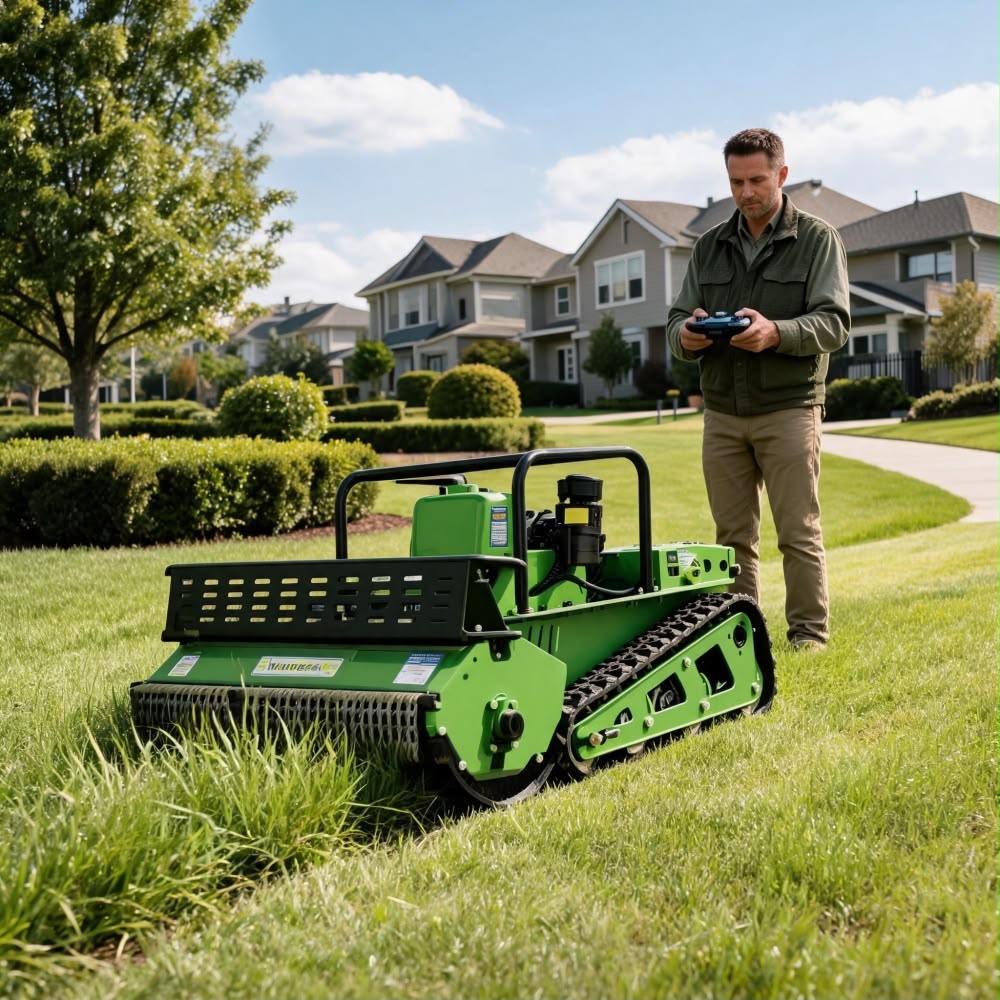
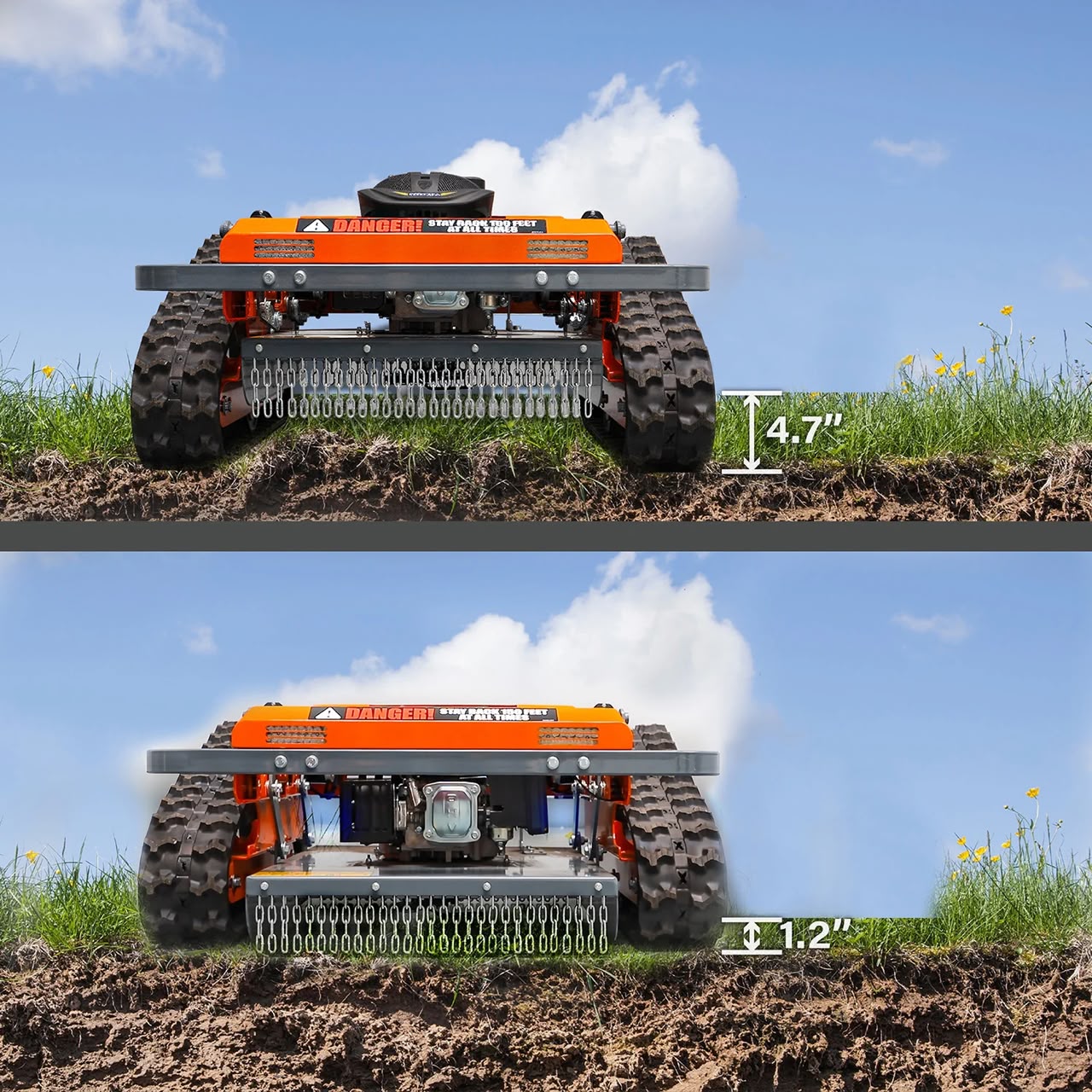
Remote controlled lawn mower navigating uneven ground and demonstrating different ground clearance levels of 4.7 inches and 1.2 inches.

What Makes a Remote Mower Suitable for Slopes?

It’s More Than the Slope Rating

You will often see remote mowers advertised with ratings such as:

30°

45°

50°

55°

60°


These numbers are important—but they shouldn’t be viewed in isolation.

A machine’s ability to operate on a slope is influenced by:

•⁠ ⁠Centre of gravity
•⁠ ⁠Machine width
•⁠ ⁠Track/wheel design
•⁠ ⁠Ground pressure
•⁠ ⁠Traction
•⁠ ⁠Machine weight
•⁠ ⁠Attachment position
•⁠ ⁠Surface conditions
•⁠ ⁠Direction of travel

For example, professional remote machines currently on the market advertise maximum working gradients ranging from around 50° to 60°, depending on the design and operating conditions.

Important:

Maximum slope capability is not the same as recommended everyday operating conditions.

Always follow the manufacturer’s operating limits.

Mobirise Website Builder

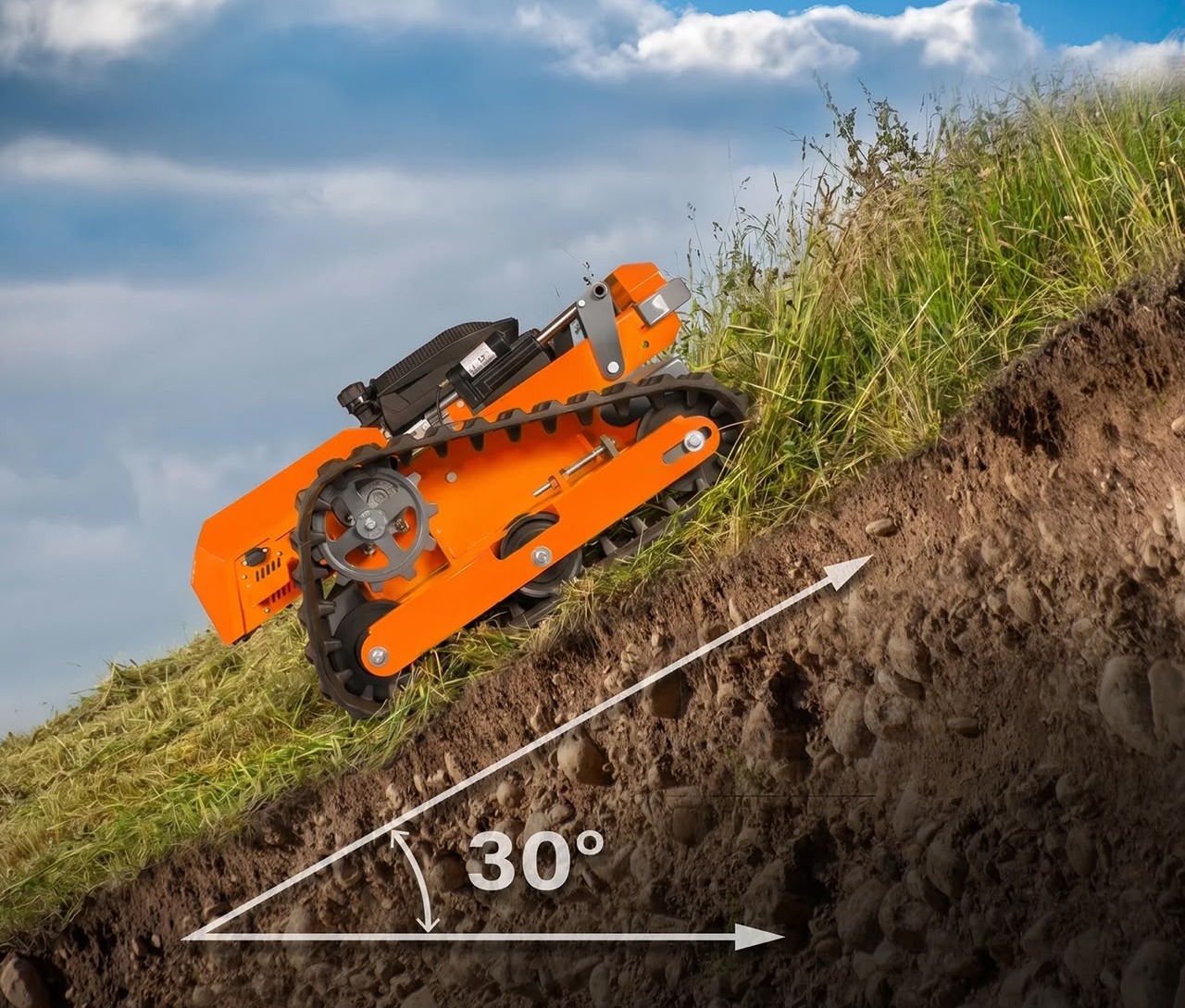
remote control tracked slope mower operating safely on a 30-degree steep hillside incline

Why Use a Remote Control Mower?

Designed for Areas Where Operator Position Matters

The primary advantage isn’t simply convenience.

It’s operator separation from the machine and working environment.

Remote operation can be valuable when mowing:

•⁠ ⁠Steep embankments
•⁠ ⁠Ditches
•⁠ ⁠Drainage channels
•⁠ ⁠Roadsides
•⁠ ⁠Rough fields
•⁠ ⁠Solar farms
•⁠ ⁠Railway embankments
•⁠ ⁠Overgrown land
•⁠ ⁠Areas with difficult access

Professional manufacturers specifically position remote-controlled machines for difficult and potentially hazardous terrain because the operator can remain away from the machine while maintaining direct control. 

Remote Control Mower Types

Not Every Remote Mower Is Built for the Same Job

Remote-Controlled Flail Mowers

Designed for tall grass, weeds and heavier vegetation.

Best suited for:
Rough terrain, slopes, fields and vegetation management.

Remote-Controlled Slope Mowers

Engineered around stability and traction on steep ground.

Best suited for:
Embankments, hillsides, drainage areas and difficult slopes.

Tracked Remote Mowers

Use continuous tracks instead of conventional wheels.

Best suited for:
Uneven ground, steep terrain and applications where traction is critical.

Wheeled Remote Mowers

Use conventional wheels, sometimes with four-wheel drive or specialized traction systems.

Best suited for:
More accessible terrain where high mobility and speed are priorities.

Heavy-Duty Vegetation Mowers

Built around larger engines, reinforced chassis and aggressive cutting systems.

Best suited for:
Commercial land management, overgrowth and demanding vegetation.

Multi-Attachment Remote Platforms

Some machines are designed as remote-controlled power platforms that can accept different attachments rather than functioning solely as lawn mowers.

Best suited for:
Professional contractors and specialized land-management operations.

Are Robotic Lawn Mowers Any Good?

Remote-Controlled vs Robotic Mowers

Robotic lawn mowers and remote-control mowers solve different problems.

Robotic Mower

Designed primarily for autonomous routine lawn maintenance.

It may use:

•⁠ ⁠GNSS/RTK
•⁠ ⁠Cameras
•⁠ ⁠Sensors
•⁠ ⁠Mapping
•⁠ ⁠Virtual boundaries
•⁠ ⁠Automated charging
•⁠ ⁠Scheduling

Remote-Controlled Mower

Designed around direct operator control.

It may use:

•⁠ ⁠Radio transmitter
•⁠ ⁠Receiver
•⁠ ⁠Joystick control
•⁠ ⁠Tracks or specialized wheels
•⁠ ⁠Flail cutting system
•⁠ ⁠Hydraulic/electric drive
•⁠ ⁠Emergency stop systems

Modern robotic mowers have become increasingly capable, including advanced positioning and vision technologies, but difficult terrain, obstacles and slope capability still vary substantially between models.

Which Is Better?

Neither is universally better.

Choose a robotic mower when your priority is automated routine lawn maintenance.

Choose a remote-control mower when direct operator control, difficult terrain, vegetation management or slope capability is more important.

Mobirise Website Builder

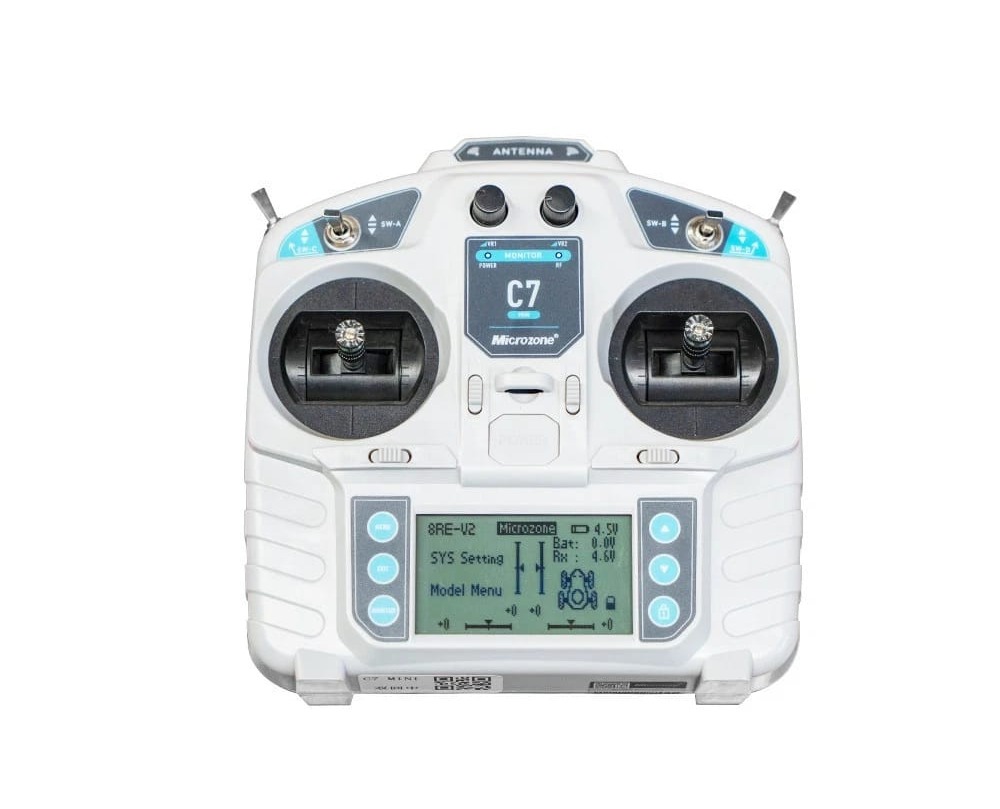
2.4GHz multi-channel wireless remote control transmitter unit for EverHUB smart lawn mowers

Remote Control Mower Kit

What Does a Remote Control Mower Kit Include?

The phrase remote control mower kit can refer to different things, so buyers should verify exactly what is included.

A complete commercial machine may incorporate:

•⁠ ⁠Remote transmitter
•⁠ ⁠Radio receiver
•⁠ ⁠Control electronics
•⁠ ⁠Drive system
•⁠ ⁠Cutting system
•⁠ ⁠Power unit
•⁠ ⁠Safety controls
•⁠ ⁠Emergency stop
•⁠ ⁠Battery/charging equipment where applicable

A conversion or retrofit kit can be very different. It may provide only the electronics and actuators required to convert an existing machine into remote operation.

Before buying a kit, check:

Is the transmitter included?

Is the receiver included?

Does it include drive actuators?

How is steering controlled?

How is blade engagement controlled?

What power source does the system require?

Is installation required?

Is the kit compatible with your mower?

What safety systems are included?

This is an area where product-specific documentation matters more than generic kit descriptions.

Safety Systems

The Remote Does Not Replace Safe Operating Practice

A professional remote mower should be evaluated by its safety architecture, not simply its radio range.

Important systems can include:

Emergency Stop

A dedicated emergency-stop control allows the operator to stop machine functions quickly.

Lost-Signal Response

Some machines are designed to enter a predefined safe state when communication with the transmitter is lost. The exact response varies by machine. Some specifications explicitly identify automatic stopping or cutting-system shutdown under signal-loss conditions.

Low-Battery Warning

A transmitter with low battery can compromise the operator’s ability to control the machine, so monitoring and warnings are important.

Tilt / Slope Protection

Some machines incorporate protective systems designed around excessive inclination or unstable operating conditions.

Parking Brake

A mechanical or automatic parking brake can provide additional security when operating on slopes.

Never treat a safety feature as permission to operate outside the manufacturer’s limits.

Engine & Power Systems

Petrol, Diesel, Electric & Hybrid

Remote mowers can use several power architectures.

Petrol Engines

Common in compact and medium-duty machines.

Advantages include established engine technology and rapid refuelling.

Diesel Engines

More common in larger professional machines where high torque and long-duty operation are important.

Battery Electric

Electric motors can provide precise drive control and eliminate an onboard combustion engine.

Hybrid

Hybrid machines combine combustion-engine generation with electric drive or electrical systems.

The appropriate powertrain depends on machine size, cutting load, operating duration and application.

For example, current professional remote platforms range from compact petrol-powered flail machines to larger hybrid and diesel machines. 

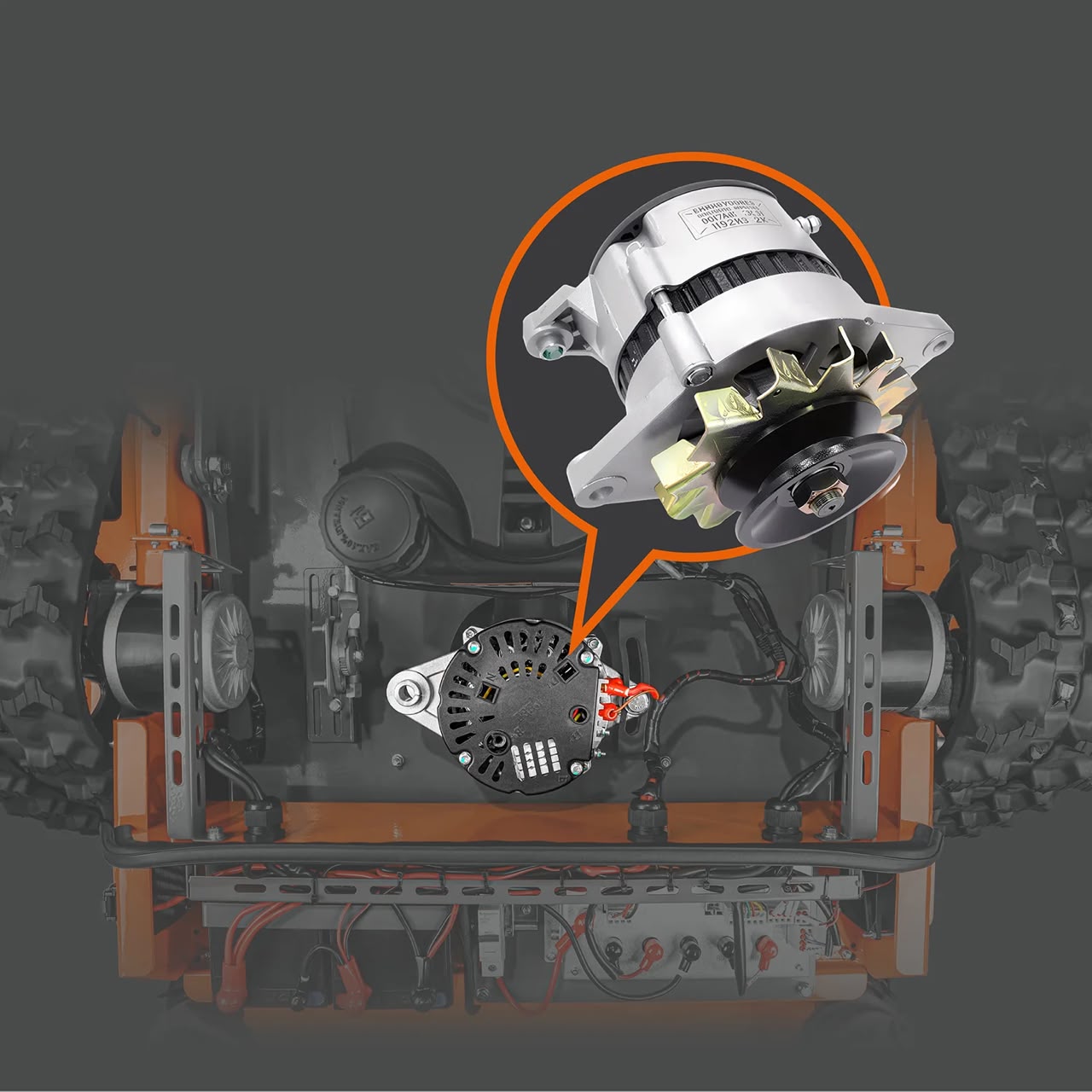
Close-up internal mechanical component view showing high-output charging alternator on EverHUB remote mower

Mobirise Website Builder

What Is the Best Remote Control Mower?

Match the Machine to the Terrain

There is no universal best remote control mower.

The right machine depends on what you’re actually trying to cut.

For steep slopes

Prioritize:

•⁠ ⁠Slope rating
•⁠ ⁠Track design
•⁠ ⁠Centre of gravity
•⁠ ⁠Traction
•⁠ ⁠Emergency systems

For tall grass and weeds

Prioritize:


•⁠ ⁠Flail rotor
•⁠ ⁠Cutting width
•⁠ ⁠Engine torque
•⁠ ⁠Rotor speed
•⁠ ⁠Cutting-height range

For large properties

Prioritize:


•⁠ ⁠Cutting width
•⁠ ⁠Operating speed
•⁠ ⁠Fuel/battery capacity
•⁠ ⁠Productivity
•⁠ ⁠Maintenance access

For difficult access

Prioritize:


•⁠ ⁠Machine width
•⁠ ⁠Ground clearance
•⁠ ⁠Track/wheel configuration
•⁠ ⁠Remote range
•⁠ ⁠Transportability

For commercial operation

Prioritize:


•⁠ ⁠Build quality
•⁠ ⁠Serviceability
•⁠ ⁠Parts availability
•⁠ ⁠Operating hours
•⁠ ⁠Safety systems
•⁠ ⁠Total cost of ownership

Company
  • About
  • Press
  • Careers
  • Social
  • Contact
Features
  • Branding
  • Promotion
  • Design
  • Creative
  • Production
Support
  • Help
  • Info
  • Contacts
  • FAQ
  • Report
About
  • History
  • Clients
  • Teams
  • Brand
  • Terms
Mobirise

Made with Mobirise ‌

Offline Web Builder